 |
 |
 |
|
|
|
|
||||||||||||||||||||||||||||||||||||||||||||||||||||||||||||||||||||||||||||||||||||||||||||||||||||||||||||||||||||||||||||||||||||||||||||||||||||||||||||||||||||||||||||||||||||||||||||||||||||||||||||||||||||||||||||||||||||||||||||||||||||||



















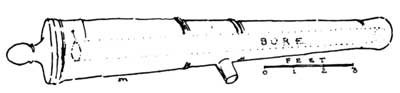
FIGURE 27—SPANISH 24-POUNDER CAST-IRON GUN (1693). Note the modern lines
of this cannon, with its flat breech and slight muzzle swell.
The caliber of the gun continued to be the yardstick
for "fortification" of the bore walls:
Vent
16
parts
End of 1st reinforce
14-1/2
do
Beginning of second reinforce
13-1/2
do
End of second reinforce
12-1/2
do
Beginning of chase
11-1/2
do
End of chase
8
do
For both bronze and iron guns, the above figures were
the same, but for bronze, Armstrong divided the caliber into 16 parts;
for iron it was only 14 parts. The walls of an iron gun thus were
slightly thicker than those of a bronze one.
This eighteenth century cannon was a cast gun, but
hoops and rings gave it the built-up look of the barrel-stave bombard,
when hoops were really functional parts of the cannon. Reinforces made
the gun look like "three frustums of cones joined together, so as the
lesser base of the former is always greater than the greatest of the
succeeding one." Ornamental fillets, astragals, and moldings, borrowed
from architecture, increased the illusion of a sectional piece. Tests
with 24-pounders of different lengths showed guns from 18 to 21 calibers
long gave generally the best performance, but what was true for the
24-pounder was not necessarily true for other pieces. Why was the
32-pounder "brass battering piece" 6 inches longer than its 42-pounder
brother? John Müller wondered about such inconsistencies and set out to
devise a new system of ordnance for Great Britain,
Like many men before him, Müller sought to increase
the caliber of cannon without increasing weight. He managed it in two
ways: he modified exterior design to save on metal, and he lessened the
powder charge to permit shortening and lightening the gun. Müller's guns
had no heavy reinforces; the metal was distributed along the bore in a
taper from powder chamber to muzzle swell. But realizing man's
reluctance to accept new things, he carefully specified the location and
size for each molding on his gun, protesting all the while the futility
of such ornaments. Not until the last half of the next century were the
experts well enough versed in metallurgy and interior ballistics to
slough off all the useless metal.
So, using powder charges about one-third the weight
of the projectile, Muller designed 14-caliber light field pieces and
15-caliber ship guns. His garrison and battering cannon, where weight
was no great disadvantage, were 18 calibers long. The figures in the
table following represent the principal dimensions for the four types of
cannon—all cast-iron except for the bronze siege guns. The first line in
the table shows the length of the cannon. To proportion the rest of the
piece, Müller divided the shot diameter into 24 parts and used it as a
yardstick. The caliber of the gun, for instance, was 25 parts, or
25/24th of the shot diameter. The few other dimensions—thickness of the
breech, length of the gun before the barrel began its taper,
fortification at vent and chase—were expressed the same way.
Field
Ship
Siege
Garrison
Length in calibers
14
15
18
18
(Other proportions in 24ths of
the shot diameter)
Caliber
25
25
25
25
Thickness of breech
14
24
16
24
Length from breech to taper
39
49
40
49
Thickness at vent
16
25
18
25
Thickness at muzzle
8
12-1/2
9
12-1/2
The heaviest of Müller's garrison guns averaged some
172 pounds of iron for every pound of the shot, while a ship gun weighed
only 146, less than half the iron that went into the sixteenth century
cannon. And for a seafaring nation such as Britain, these were important
things. Perhaps the opposite table will give a fair idea of the changes
in English ordnance during the eighteenth century. It is based upon John
Müller's lists of 1756; the "old" ordnance includes cannon still in use
during Müller's time, while the "new" ordnance is Müller's own.
Calibers and lengths of principal eighteenth century
English cannon
Caliber
Field
Ship
Siege
Garrison
Iron
Bronze
Iron
Bronze
Iron
Bronze
Iron
Bronze
Iron
Bronze
1-1/2 pounder
6'0"
3-pounder
3'6"
3'3"
3'6"
4'6"
3'6"
7'0"
4'6"
4'2"
4-pounder
6'0"
6-pounder
4'6"
4'1"
8'0"
4'4"
7'0"
4'4"
8'0"
6'6"
5'3"
9-pounder
4'8"
5'0"
7'0"
5'0"
9'0"
7'0"
6'0"
12-pounder
5'0"
5'1"
9'0"
5'6"
9'0"
5'6"
9'0"
6'7"
8'0"
6'7"
18-pounder
5'10"
6'4"
9'0"
6'4"
9'6"
7'6"
9'0"
7'6"
24-pounder
5'6"
6'5"
9'6"
7'0"
9'0"
7'0"
9'6"
8'4"
9'0"
8'4"
32-pounder
7'6"
9'6"
7'6"
10'0"
9'2"
9'6"
9'2"
36-pounder
7'10"
9'6"
42-pounder
9'6"
8'4"
10'0"
8'4"
9'6"
10'0"
10'0"
48-pounder
8'6"
8'6"
10'6"
Windage in the English gun of 1750 was about 20
percent greater than in French pieces. The English ratio of shot to
caliber was 20:21; across the channel it was 26:27. Thus, an English
9-pounder fired a 4.00-inch ball from a 4.20-inch bore; the French
9-pounder ball was 4.18 inches and the bore 4.34.
The British figured greater windage was both
convenient and economical: windage, said they, ought to be just as thick
as the metal in the gunner's ladle; standing shot stuck in the bore and
unless it could be loosened with the ladle, had to be fired away and
lost. John Müller brushed aside such arguments impatiently. With a
proper wad over the shot, no dust or dirt could get in; and when the
muzzle was lowered, said Müller, the shot "will roll out of course."
Besides, compared with increased accuracy, the loss of a shot was
trifling. Furthermore, with less room for the shot to bounce around the
bore, the cannon would "not be spoiled so soon." Müller set the ratio of
shot to caliber as 24:25.
In the 1700's cast-iron guns became the principal
artillery afloat and ashore, yet cast bronze was superior in
withstanding the stresses of firing. Because of its toughness, less
metal was needed in a bronze gun than in a cast-iron one, so in spite of
the fact that bronze is about 20 percent heavier than iron, the bronze
piece was usually the lighter of the two. For "position" guns in
permanent fortifications where weight was no disadvantage, iron reigned
supreme until the advent of steel guns. But non-rusting bronze was
always preferable aboard ship or in seacoast forts.
Müller strongly advocated bronze for ship guns.
"Notwithstanding all the precautions that can be taken to make iron guns
of a sufficient strength," he said, "yet accidents will sometimes
happen, either by the mismanagement of the sailors, or by frosty
weather, which renders iron very brittle." A bronze 24-pounder cost
£156, compared with £75 for the iron piece, but the initial saving was
offset when the gun wore out. The iron gun was then good for nothing
except scrap at a farthing per pound, while the bronze cannon could be
recast "as often as you please."
In 1740, Maritz of Switzerland made an outstanding
contribution to the technique of ordnance manufacture. Instead of hollow
casting (that is, forming the bore by casting the gun around a core),
Maritz cast the gun solid, then drilled the bore, thus improving its
uniformity. But although the bore might be drilled quite smooth, the
outside of a cast-iron gun was always rough. Bronze cannon, however,
could be put in the lathes to true up even the exterior. While after
1750 the foundries seldom turned out bronze pieces as ornate as the
Renaissance culverins, a few decorations remained and many guns were
still personalized with names in raised letters on the gun. Castillo de
San Marcos has a 4-pounder "San Marcos," and, indeed, saints' names were
not uncommon on Spanish ordnance. Other typical names were El Espanto
(The Terror), El Destrozo (The Destroyer), Generoso
(Generous), El Toro (The Bull), and El Belicoso (The
Quarrelsome One).
In some instances, decoration was useful. The French,
for instance, at one time used different shapes of cascabels to denote
certain calibers; and even a fancy cascabel shaped like a lion's head
was always a handy place for anchoring breeching tackle or maneuvering
lines. The dolphins or handles atop bronze guns were never merely
ornaments. Usually they were at the balance point of the gun; tackle run
through them and hooked to the big tripod or "gin" lifted the cannon
from its carriage.
| Vent | 16 | parts |
| End of 1st reinforce | 14-1/2 | do |
| Beginning of second reinforce | 13-1/2 | do |
| End of second reinforce | 12-1/2 | do |
| Beginning of chase | 11-1/2 | do |
| End of chase | 8 | do |
For both bronze and iron guns, the above figures were
the same, but for bronze, Armstrong divided the caliber into 16 parts;
for iron it was only 14 parts. The walls of an iron gun thus were
slightly thicker than those of a bronze one.
This eighteenth century cannon was a cast gun, but
hoops and rings gave it the built-up look of the barrel-stave bombard,
when hoops were really functional parts of the cannon. Reinforces made
the gun look like "three frustums of cones joined together, so as the
lesser base of the former is always greater than the greatest of the
succeeding one." Ornamental fillets, astragals, and moldings, borrowed
from architecture, increased the illusion of a sectional piece. Tests
with 24-pounders of different lengths showed guns from 18 to 21 calibers
long gave generally the best performance, but what was true for the
24-pounder was not necessarily true for other pieces. Why was the
32-pounder "brass battering piece" 6 inches longer than its 42-pounder
brother? John Müller wondered about such inconsistencies and set out to
devise a new system of ordnance for Great Britain,
Like many men before him, Müller sought to increase
the caliber of cannon without increasing weight. He managed it in two
ways: he modified exterior design to save on metal, and he lessened the
powder charge to permit shortening and lightening the gun. Müller's guns
had no heavy reinforces; the metal was distributed along the bore in a
taper from powder chamber to muzzle swell. But realizing man's
reluctance to accept new things, he carefully specified the location and
size for each molding on his gun, protesting all the while the futility
of such ornaments. Not until the last half of the next century were the
experts well enough versed in metallurgy and interior ballistics to
slough off all the useless metal.
So, using powder charges about one-third the weight
of the projectile, Muller designed 14-caliber light field pieces and
15-caliber ship guns. His garrison and battering cannon, where weight
was no great disadvantage, were 18 calibers long. The figures in the
table following represent the principal dimensions for the four types of
cannon—all cast-iron except for the bronze siege guns. The first line in
the table shows the length of the cannon. To proportion the rest of the
piece, Müller divided the shot diameter into 24 parts and used it as a
yardstick. The caliber of the gun, for instance, was 25 parts, or
25/24th of the shot diameter. The few other dimensions—thickness of the
breech, length of the gun before the barrel began its taper,
fortification at vent and chase—were expressed the same way.
Field
Ship
Siege
Garrison
Length in calibers
14
15
18
18
(Other proportions in 24ths of
the shot diameter)
Caliber
25
25
25
25
Thickness of breech
14
24
16
24
Length from breech to taper
39
49
40
49
Thickness at vent
16
25
18
25
Thickness at muzzle
8
12-1/2
9
12-1/2
The heaviest of Müller's garrison guns averaged some
172 pounds of iron for every pound of the shot, while a ship gun weighed
only 146, less than half the iron that went into the sixteenth century
cannon. And for a seafaring nation such as Britain, these were important
things. Perhaps the opposite table will give a fair idea of the changes
in English ordnance during the eighteenth century. It is based upon John
Müller's lists of 1756; the "old" ordnance includes cannon still in use
during Müller's time, while the "new" ordnance is Müller's own.
Calibers and lengths of principal eighteenth century
English cannon
Caliber
Field
Ship
Siege
Garrison
Iron
Bronze
Iron
Bronze
Iron
Bronze
Iron
Bronze
Iron
Bronze
1-1/2 pounder
6'0"
3-pounder
3'6"
3'3"
3'6"
4'6"
3'6"
7'0"
4'6"
4'2"
4-pounder
6'0"
6-pounder
4'6"
4'1"
8'0"
4'4"
7'0"
4'4"
8'0"
6'6"
5'3"
9-pounder
4'8"
5'0"
7'0"
5'0"
9'0"
7'0"
6'0"
12-pounder
5'0"
5'1"
9'0"
5'6"
9'0"
5'6"
9'0"
6'7"
8'0"
6'7"
18-pounder
5'10"
6'4"
9'0"
6'4"
9'6"
7'6"
9'0"
7'6"
24-pounder
5'6"
6'5"
9'6"
7'0"
9'0"
7'0"
9'6"
8'4"
9'0"
8'4"
32-pounder
7'6"
9'6"
7'6"
10'0"
9'2"
9'6"
9'2"
36-pounder
7'10"
9'6"
42-pounder
9'6"
8'4"
10'0"
8'4"
9'6"
10'0"
10'0"
48-pounder
8'6"
8'6"
10'6"
Windage in the English gun of 1750 was about 20
percent greater than in French pieces. The English ratio of shot to
caliber was 20:21; across the channel it was 26:27. Thus, an English
9-pounder fired a 4.00-inch ball from a 4.20-inch bore; the French
9-pounder ball was 4.18 inches and the bore 4.34.
The British figured greater windage was both
convenient and economical: windage, said they, ought to be just as thick
as the metal in the gunner's ladle; standing shot stuck in the bore and
unless it could be loosened with the ladle, had to be fired away and
lost. John Müller brushed aside such arguments impatiently. With a
proper wad over the shot, no dust or dirt could get in; and when the
muzzle was lowered, said Müller, the shot "will roll out of course."
Besides, compared with increased accuracy, the loss of a shot was
trifling. Furthermore, with less room for the shot to bounce around the
bore, the cannon would "not be spoiled so soon." Müller set the ratio of
shot to caliber as 24:25.
In the 1700's cast-iron guns became the principal
artillery afloat and ashore, yet cast bronze was superior in
withstanding the stresses of firing. Because of its toughness, less
metal was needed in a bronze gun than in a cast-iron one, so in spite of
the fact that bronze is about 20 percent heavier than iron, the bronze
piece was usually the lighter of the two. For "position" guns in
permanent fortifications where weight was no disadvantage, iron reigned
supreme until the advent of steel guns. But non-rusting bronze was
always preferable aboard ship or in seacoast forts.
Müller strongly advocated bronze for ship guns.
"Notwithstanding all the precautions that can be taken to make iron guns
of a sufficient strength," he said, "yet accidents will sometimes
happen, either by the mismanagement of the sailors, or by frosty
weather, which renders iron very brittle." A bronze 24-pounder cost
£156, compared with £75 for the iron piece, but the initial saving was
offset when the gun wore out. The iron gun was then good for nothing
except scrap at a farthing per pound, while the bronze cannon could be
recast "as often as you please."
In 1740, Maritz of Switzerland made an outstanding
contribution to the technique of ordnance manufacture. Instead of hollow
casting (that is, forming the bore by casting the gun around a core),
Maritz cast the gun solid, then drilled the bore, thus improving its
uniformity. But although the bore might be drilled quite smooth, the
outside of a cast-iron gun was always rough. Bronze cannon, however,
could be put in the lathes to true up even the exterior. While after
1750 the foundries seldom turned out bronze pieces as ornate as the
Renaissance culverins, a few decorations remained and many guns were
still personalized with names in raised letters on the gun. Castillo de
San Marcos has a 4-pounder "San Marcos," and, indeed, saints' names were
not uncommon on Spanish ordnance. Other typical names were El Espanto
(The Terror), El Destrozo (The Destroyer), Generoso
(Generous), El Toro (The Bull), and El Belicoso (The
Quarrelsome One).
In some instances, decoration was useful. The French,
for instance, at one time used different shapes of cascabels to denote
certain calibers; and even a fancy cascabel shaped like a lion's head
was always a handy place for anchoring breeching tackle or maneuvering
lines. The dolphins or handles atop bronze guns were never merely
ornaments. Usually they were at the balance point of the gun; tackle run
through them and hooked to the big tripod or "gin" lifted the cannon
from its carriage.
Like many men before him, Müller sought to increase
the caliber of cannon without increasing weight. He managed it in two
ways: he modified exterior design to save on metal, and he lessened the
powder charge to permit shortening and lightening the gun. Müller's guns
had no heavy reinforces; the metal was distributed along the bore in a
taper from powder chamber to muzzle swell. But realizing man's
reluctance to accept new things, he carefully specified the location and
size for each molding on his gun, protesting all the while the futility
of such ornaments. Not until the last half of the next century were the
experts well enough versed in metallurgy and interior ballistics to
slough off all the useless metal.
So, using powder charges about one-third the weight
of the projectile, Muller designed 14-caliber light field pieces and
15-caliber ship guns. His garrison and battering cannon, where weight
was no great disadvantage, were 18 calibers long. The figures in the
table following represent the principal dimensions for the four types of
cannon—all cast-iron except for the bronze siege guns. The first line in
the table shows the length of the cannon. To proportion the rest of the
piece, Müller divided the shot diameter into 24 parts and used it as a
yardstick. The caliber of the gun, for instance, was 25 parts, or
25/24th of the shot diameter. The few other dimensions—thickness of the
breech, length of the gun before the barrel began its taper,
fortification at vent and chase—were expressed the same way.
Field
Ship
Siege
Garrison
Length in calibers
14
15
18
18
(Other proportions in 24ths of
the shot diameter)
Caliber
25
25
25
25
Thickness of breech
14
24
16
24
Length from breech to taper
39
49
40
49
Thickness at vent
16
25
18
25
Thickness at muzzle
8
12-1/2
9
12-1/2
The heaviest of Müller's garrison guns averaged some
172 pounds of iron for every pound of the shot, while a ship gun weighed
only 146, less than half the iron that went into the sixteenth century
cannon. And for a seafaring nation such as Britain, these were important
things. Perhaps the opposite table will give a fair idea of the changes
in English ordnance during the eighteenth century. It is based upon John
Müller's lists of 1756; the "old" ordnance includes cannon still in use
during Müller's time, while the "new" ordnance is Müller's own.
Calibers and lengths of principal eighteenth century
English cannon
Caliber
Field
Ship
Siege
Garrison
Iron
Bronze
Iron
Bronze
Iron
Bronze
Iron
Bronze
Iron
Bronze
1-1/2 pounder
6'0"
3-pounder
3'6"
3'3"
3'6"
4'6"
3'6"
7'0"
4'6"
4'2"
4-pounder
6'0"
6-pounder
4'6"
4'1"
8'0"
4'4"
7'0"
4'4"
8'0"
6'6"
5'3"
9-pounder
4'8"
5'0"
7'0"
5'0"
9'0"
7'0"
6'0"
12-pounder
5'0"
5'1"
9'0"
5'6"
9'0"
5'6"
9'0"
6'7"
8'0"
6'7"
18-pounder
5'10"
6'4"
9'0"
6'4"
9'6"
7'6"
9'0"
7'6"
24-pounder
5'6"
6'5"
9'6"
7'0"
9'0"
7'0"
9'6"
8'4"
9'0"
8'4"
32-pounder
7'6"
9'6"
7'6"
10'0"
9'2"
9'6"
9'2"
36-pounder
7'10"
9'6"
42-pounder
9'6"
8'4"
10'0"
8'4"
9'6"
10'0"
10'0"
48-pounder
8'6"
8'6"
10'6"
Windage in the English gun of 1750 was about 20
percent greater than in French pieces. The English ratio of shot to
caliber was 20:21; across the channel it was 26:27. Thus, an English
9-pounder fired a 4.00-inch ball from a 4.20-inch bore; the French
9-pounder ball was 4.18 inches and the bore 4.34.
The British figured greater windage was both
convenient and economical: windage, said they, ought to be just as thick
as the metal in the gunner's ladle; standing shot stuck in the bore and
unless it could be loosened with the ladle, had to be fired away and
lost. John Müller brushed aside such arguments impatiently. With a
proper wad over the shot, no dust or dirt could get in; and when the
muzzle was lowered, said Müller, the shot "will roll out of course."
Besides, compared with increased accuracy, the loss of a shot was
trifling. Furthermore, with less room for the shot to bounce around the
bore, the cannon would "not be spoiled so soon." Müller set the ratio of
shot to caliber as 24:25.
In the 1700's cast-iron guns became the principal
artillery afloat and ashore, yet cast bronze was superior in
withstanding the stresses of firing. Because of its toughness, less
metal was needed in a bronze gun than in a cast-iron one, so in spite of
the fact that bronze is about 20 percent heavier than iron, the bronze
piece was usually the lighter of the two. For "position" guns in
permanent fortifications where weight was no disadvantage, iron reigned
supreme until the advent of steel guns. But non-rusting bronze was
always preferable aboard ship or in seacoast forts.
Müller strongly advocated bronze for ship guns.
"Notwithstanding all the precautions that can be taken to make iron guns
of a sufficient strength," he said, "yet accidents will sometimes
happen, either by the mismanagement of the sailors, or by frosty
weather, which renders iron very brittle." A bronze 24-pounder cost
£156, compared with £75 for the iron piece, but the initial saving was
offset when the gun wore out. The iron gun was then good for nothing
except scrap at a farthing per pound, while the bronze cannon could be
recast "as often as you please."
In 1740, Maritz of Switzerland made an outstanding
contribution to the technique of ordnance manufacture. Instead of hollow
casting (that is, forming the bore by casting the gun around a core),
Maritz cast the gun solid, then drilled the bore, thus improving its
uniformity. But although the bore might be drilled quite smooth, the
outside of a cast-iron gun was always rough. Bronze cannon, however,
could be put in the lathes to true up even the exterior. While after
1750 the foundries seldom turned out bronze pieces as ornate as the
Renaissance culverins, a few decorations remained and many guns were
still personalized with names in raised letters on the gun. Castillo de
San Marcos has a 4-pounder "San Marcos," and, indeed, saints' names were
not uncommon on Spanish ordnance. Other typical names were El Espanto
(The Terror), El Destrozo (The Destroyer), Generoso
(Generous), El Toro (The Bull), and El Belicoso (The
Quarrelsome One).
In some instances, decoration was useful. The French,
for instance, at one time used different shapes of cascabels to denote
certain calibers; and even a fancy cascabel shaped like a lion's head
was always a handy place for anchoring breeching tackle or maneuvering
lines. The dolphins or handles atop bronze guns were never merely
ornaments. Usually they were at the balance point of the gun; tackle run
through them and hooked to the big tripod or "gin" lifted the cannon
from its carriage.
| Field | Ship | Siege | Garrison | |
| Length in calibers | 14 | 15 | 18 | 18 |
| (Other proportions in 24ths of the shot diameter) | ||||
| Caliber | 25 | 25 | 25 | 25 |
| Thickness of breech | 14 | 24 | 16 | 24 |
| Length from breech to taper | 39 | 49 | 40 | 49 |
| Thickness at vent | 16 | 25 | 18 | 25 |
| Thickness at muzzle | 8 | 12-1/2 | 9 | 12-1/2 |
The heaviest of Müller's garrison guns averaged some
172 pounds of iron for every pound of the shot, while a ship gun weighed
only 146, less than half the iron that went into the sixteenth century
cannon. And for a seafaring nation such as Britain, these were important
things. Perhaps the opposite table will give a fair idea of the changes
in English ordnance during the eighteenth century. It is based upon John
Müller's lists of 1756; the "old" ordnance includes cannon still in use
during Müller's time, while the "new" ordnance is Müller's own.
Calibers and lengths of principal eighteenth century
English cannon
Caliber
Field
Ship
Siege
Garrison
Iron
Bronze
Iron
Bronze
Iron
Bronze
Iron
Bronze
Iron
Bronze
1-1/2 pounder
6'0"
3-pounder
3'6"
3'3"
3'6"
4'6"
3'6"
7'0"
4'6"
4'2"
4-pounder
6'0"
6-pounder
4'6"
4'1"
8'0"
4'4"
7'0"
4'4"
8'0"
6'6"
5'3"
9-pounder
4'8"
5'0"
7'0"
5'0"
9'0"
7'0"
6'0"
12-pounder
5'0"
5'1"
9'0"
5'6"
9'0"
5'6"
9'0"
6'7"
8'0"
6'7"
18-pounder
5'10"
6'4"
9'0"
6'4"
9'6"
7'6"
9'0"
7'6"
24-pounder
5'6"
6'5"
9'6"
7'0"
9'0"
7'0"
9'6"
8'4"
9'0"
8'4"
32-pounder
7'6"
9'6"
7'6"
10'0"
9'2"
9'6"
9'2"
36-pounder
7'10"
9'6"
42-pounder
9'6"
8'4"
10'0"
8'4"
9'6"
10'0"
10'0"
48-pounder
8'6"
8'6"
10'6"
Windage in the English gun of 1750 was about 20
percent greater than in French pieces. The English ratio of shot to
caliber was 20:21; across the channel it was 26:27. Thus, an English
9-pounder fired a 4.00-inch ball from a 4.20-inch bore; the French
9-pounder ball was 4.18 inches and the bore 4.34.
The British figured greater windage was both
convenient and economical: windage, said they, ought to be just as thick
as the metal in the gunner's ladle; standing shot stuck in the bore and
unless it could be loosened with the ladle, had to be fired away and
lost. John Müller brushed aside such arguments impatiently. With a
proper wad over the shot, no dust or dirt could get in; and when the
muzzle was lowered, said Müller, the shot "will roll out of course."
Besides, compared with increased accuracy, the loss of a shot was
trifling. Furthermore, with less room for the shot to bounce around the
bore, the cannon would "not be spoiled so soon." Müller set the ratio of
shot to caliber as 24:25.
In the 1700's cast-iron guns became the principal
artillery afloat and ashore, yet cast bronze was superior in
withstanding the stresses of firing. Because of its toughness, less
metal was needed in a bronze gun than in a cast-iron one, so in spite of
the fact that bronze is about 20 percent heavier than iron, the bronze
piece was usually the lighter of the two. For "position" guns in
permanent fortifications where weight was no disadvantage, iron reigned
supreme until the advent of steel guns. But non-rusting bronze was
always preferable aboard ship or in seacoast forts.
Müller strongly advocated bronze for ship guns.
"Notwithstanding all the precautions that can be taken to make iron guns
of a sufficient strength," he said, "yet accidents will sometimes
happen, either by the mismanagement of the sailors, or by frosty
weather, which renders iron very brittle." A bronze 24-pounder cost
£156, compared with £75 for the iron piece, but the initial saving was
offset when the gun wore out. The iron gun was then good for nothing
except scrap at a farthing per pound, while the bronze cannon could be
recast "as often as you please."
In 1740, Maritz of Switzerland made an outstanding
contribution to the technique of ordnance manufacture. Instead of hollow
casting (that is, forming the bore by casting the gun around a core),
Maritz cast the gun solid, then drilled the bore, thus improving its
uniformity. But although the bore might be drilled quite smooth, the
outside of a cast-iron gun was always rough. Bronze cannon, however,
could be put in the lathes to true up even the exterior. While after
1750 the foundries seldom turned out bronze pieces as ornate as the
Renaissance culverins, a few decorations remained and many guns were
still personalized with names in raised letters on the gun. Castillo de
San Marcos has a 4-pounder "San Marcos," and, indeed, saints' names were
not uncommon on Spanish ordnance. Other typical names were El Espanto
(The Terror), El Destrozo (The Destroyer), Generoso
(Generous), El Toro (The Bull), and El Belicoso (The
Quarrelsome One).
In some instances, decoration was useful. The French,
for instance, at one time used different shapes of cascabels to denote
certain calibers; and even a fancy cascabel shaped like a lion's head
was always a handy place for anchoring breeching tackle or maneuvering
lines. The dolphins or handles atop bronze guns were never merely
ornaments. Usually they were at the balance point of the gun; tackle run
through them and hooked to the big tripod or "gin" lifted the cannon
from its carriage.
| Caliber | Field | Ship | Siege | Garrison | ||||||
| Iron | Bronze | Iron | Bronze | Iron | Bronze | Iron | Bronze | Iron | Bronze | |
| 1-1/2 pounder | 6'0" | |||||||||
| 3-pounder | 3'6" | 3'3" | 3'6" | 4'6" | 3'6" | 7'0" | 4'6" | 4'2" | ||
| 4-pounder | 6'0" | |||||||||
| 6-pounder | 4'6" | 4'1" | 8'0" | 4'4" | 7'0" | 4'4" | 8'0" | 6'6" | 5'3" | |
| 9-pounder | 4'8" | 5'0" | 7'0" | 5'0" | 9'0" | 7'0" | 6'0" | |||
| 12-pounder | 5'0" | 5'1" | 9'0" | 5'6" | 9'0" | 5'6" | 9'0" | 6'7" | 8'0" | 6'7" |
| 18-pounder | 5'10" | 6'4" | 9'0" | 6'4" | 9'6" | 7'6" | 9'0" | 7'6" | ||
| 24-pounder | 5'6" | 6'5" | 9'6" | 7'0" | 9'0" | 7'0" | 9'6" | 8'4" | 9'0" | 8'4" |
| 32-pounder | 7'6" | 9'6" | 7'6" | 10'0" | 9'2" | 9'6" | 9'2" | |||
| 36-pounder | 7'10" | 9'6" | ||||||||
| 42-pounder | 9'6" | 8'4" | 10'0" | 8'4" | 9'6" | 10'0" | 10'0" | |||
| 48-pounder | 8'6" | 8'6" | 10'6" | |||||||
The British figured greater windage was both
convenient and economical: windage, said they, ought to be just as thick
as the metal in the gunner's ladle; standing shot stuck in the bore and
unless it could be loosened with the ladle, had to be fired away and
lost. John Müller brushed aside such arguments impatiently. With a
proper wad over the shot, no dust or dirt could get in; and when the
muzzle was lowered, said Müller, the shot "will roll out of course."
Besides, compared with increased accuracy, the loss of a shot was
trifling. Furthermore, with less room for the shot to bounce around the
bore, the cannon would "not be spoiled so soon." Müller set the ratio of
shot to caliber as 24:25.
In the 1700's cast-iron guns became the principal
artillery afloat and ashore, yet cast bronze was superior in
withstanding the stresses of firing. Because of its toughness, less
metal was needed in a bronze gun than in a cast-iron one, so in spite of
the fact that bronze is about 20 percent heavier than iron, the bronze
piece was usually the lighter of the two. For "position" guns in
permanent fortifications where weight was no disadvantage, iron reigned
supreme until the advent of steel guns. But non-rusting bronze was
always preferable aboard ship or in seacoast forts.
Müller strongly advocated bronze for ship guns.
"Notwithstanding all the precautions that can be taken to make iron guns
of a sufficient strength," he said, "yet accidents will sometimes
happen, either by the mismanagement of the sailors, or by frosty
weather, which renders iron very brittle." A bronze 24-pounder cost
£156, compared with £75 for the iron piece, but the initial saving was
offset when the gun wore out. The iron gun was then good for nothing
except scrap at a farthing per pound, while the bronze cannon could be
recast "as often as you please."
In 1740, Maritz of Switzerland made an outstanding
contribution to the technique of ordnance manufacture. Instead of hollow
casting (that is, forming the bore by casting the gun around a core),
Maritz cast the gun solid, then drilled the bore, thus improving its
uniformity. But although the bore might be drilled quite smooth, the
outside of a cast-iron gun was always rough. Bronze cannon, however,
could be put in the lathes to true up even the exterior. While after
1750 the foundries seldom turned out bronze pieces as ornate as the
Renaissance culverins, a few decorations remained and many guns were
still personalized with names in raised letters on the gun. Castillo de
San Marcos has a 4-pounder "San Marcos," and, indeed, saints' names were
not uncommon on Spanish ordnance. Other typical names were El Espanto
(The Terror), El Destrozo (The Destroyer), Generoso
(Generous), El Toro (The Bull), and El Belicoso (The
Quarrelsome One).
In some instances, decoration was useful. The French,
for instance, at one time used different shapes of cascabels to denote
certain calibers; and even a fancy cascabel shaped like a lion's head
was always a handy place for anchoring breeching tackle or maneuvering
lines. The dolphins or handles atop bronze guns were never merely
ornaments. Usually they were at the balance point of the gun; tackle run
through them and hooked to the big tripod or "gin" lifted the cannon
from its carriage.
Müller strongly advocated bronze for ship guns.
"Notwithstanding all the precautions that can be taken to make iron guns
of a sufficient strength," he said, "yet accidents will sometimes
happen, either by the mismanagement of the sailors, or by frosty
weather, which renders iron very brittle." A bronze 24-pounder cost
£156, compared with £75 for the iron piece, but the initial saving was
offset when the gun wore out. The iron gun was then good for nothing
except scrap at a farthing per pound, while the bronze cannon could be
recast "as often as you please."
In 1740, Maritz of Switzerland made an outstanding
contribution to the technique of ordnance manufacture. Instead of hollow
casting (that is, forming the bore by casting the gun around a core),
Maritz cast the gun solid, then drilled the bore, thus improving its
uniformity. But although the bore might be drilled quite smooth, the
outside of a cast-iron gun was always rough. Bronze cannon, however,
could be put in the lathes to true up even the exterior. While after
1750 the foundries seldom turned out bronze pieces as ornate as the
Renaissance culverins, a few decorations remained and many guns were
still personalized with names in raised letters on the gun. Castillo de
San Marcos has a 4-pounder "San Marcos," and, indeed, saints' names were
not uncommon on Spanish ordnance. Other typical names were El Espanto
(The Terror), El Destrozo (The Destroyer), Generoso
(Generous), El Toro (The Bull), and El Belicoso (The
Quarrelsome One).
In some instances, decoration was useful. The French,
for instance, at one time used different shapes of cascabels to denote
certain calibers; and even a fancy cascabel shaped like a lion's head
was always a handy place for anchoring breeching tackle or maneuvering
lines. The dolphins or handles atop bronze guns were never merely
ornaments. Usually they were at the balance point of the gun; tackle run
through them and hooked to the big tripod or "gin" lifted the cannon
from its carriage.
In some instances, decoration was useful. The French, for instance, at one time used different shapes of cascabels to denote certain calibers; and even a fancy cascabel shaped like a lion's head was always a handy place for anchoring breeching tackle or maneuvering lines. The dolphins or handles atop bronze guns were never merely ornaments. Usually they were at the balance point of the gun; tackle run through them and hooked to the big tripod or "gin" lifted the cannon from its carriage.


 |
 |
|
|
|
 |